Bie-Modernist cultural computing makes its debut at the 2025 Shanghai World Culture Conference
The “2025 World City Culture Conference: The New Ecological Quality and Consumption Momentum of Urban Culture in the AI Era” was hosted by multiple organizations including the Shanghai Municipal Committee of Publicity, the Shanghai Municipal Department of Culture and Tourism, etc. It was held at Shanghai Tower on November 15, 2025. Diplomats from various countries in China, representatives of global AI experts, academic elites, and CEOs of major enterprises attended the conference. The conference was divided into five series of forums. Among them, the “Artificial Intelligence and the Future of Art” forum focused on discussing issues related to AI and art. Invited by the conference, Wang Jianjiang, the founder of modernist theory, a secondary professor at Shanghai Normal University, the director of the Institute of Aesthetics and Art Education, the director of the American China Modern Studies Center (CCBMS), a director of the International Human-Computer Interaction Conference (HCII), and the chairperson of the International Cultural Computing (C&C) Conference, delivered a keynote speech titled “The Theoretical Construction and Multi-Domain Applications of Modernist Cultural Computing”.
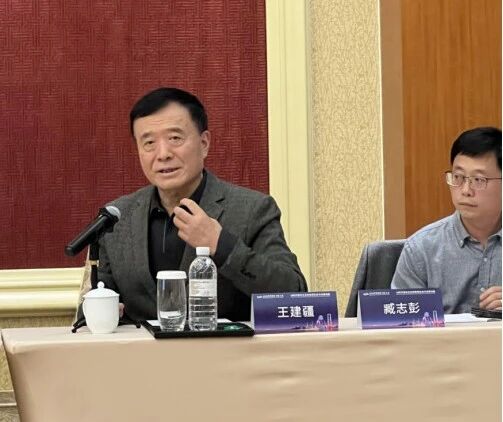
Professor Wang Jianjiang first systematically expounded the principles and origin of the “Bie-Modernist Cultural Computing” (BCC) from its reaction to the anti-transmission, anti-cutting, and anti-innovation of modernism in Zhuangzi’s “Wu Dai” and “Qi Wu Lun”, to its introduction of the qualitative method for determining the purity of gold, and then to its combination with foreign “cultural computing”. He highlighted the differences between BCC and humanistic digital computing, big data computing, and statistics, and revealed its essential attribute of “cultural quality computing”.
At the methodological level, Professor Wang Jianjiang named the original method of BCC as “deep distinct”, which involves conducting qualitative analysis of complex cultural phenomena through steps such as “vector expression”, “model iterative training”, and “verification”. This enables breaking free from the constraints of “pseudo-modernist”, “post-truth”, and “deep fake”, and achieving true modernization. To this end, Professor Wang Jianjiang selected three typical cases from his team members’ analysis of the lyrics of Tu Lan, Zhang Yimou’s films, and the implementation of life equity, making the original concept of “deep distinct” accessible and understandable.
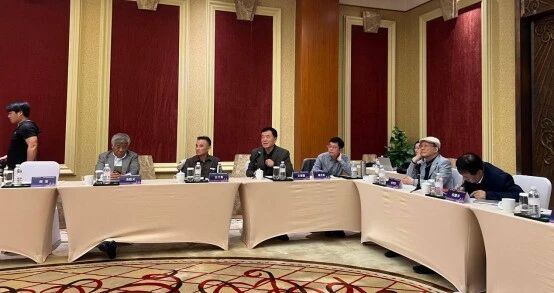
In terms of the application of BCC, Professor Wang Jianjiang presented the progress of BCC in nine aspects: theoretical method research, literary studies, film criticism, life equity, human conception, aesthetics research, design science, education, and database construction. This demonstrated the broad application prospects of BCC.
Professor Wang Jianjiang introduced the increasingly significant influence of BCC internationally, showcasing the vision that Chinese original concepts, original methods, original thoughts, and original discourses will coexist with the rapidly developing computer science and artificial intelligence. Professor Wang Jianjiang’s captivating speech elicited enthusiastic responses from the attendees. Professor Zang Zhipeng, a professor from Tongji University and the executive deputy director of the Cultural Metaverse Special Committee of the China Cultural Industry Association, believed that “Bie-Modernist Cultural Computing” has initiated a new discipline. The conference host, researcher Rong Yueming from the Shanghai Cultural Research Center, believed that “Bie- Modernist Cultural Computing” has encompassed all the topics discussed in the afternoon, being a highly inclusive and dynamic academic theory. His research center will seek various forms of cooperation with BCC and further explore and expand its research.